Many people want straighter teeth but feel hesitant about wearing visible braces. If you share this concern, lingual braces may be an excellent option. They offer the same goal as traditional braces while remaining hidden behind your teeth.
Lingual braces are a specialized orthodontic treatment designed to correct bite problems, crowding, spacing, and other alignment concerns without changing your appearance during treatment.
At Airport Dent, a Pendik oral and dental health hospital, we believe patients feel more confident choosing lingual braces when they clearly understand how the treatment works, what to expect, and whether it suits their needs.
Our team provides honest guidance, personalized treatment planning, and compassionate support throughout every stage of the orthodontic journey.
What Are Lingual Braces?
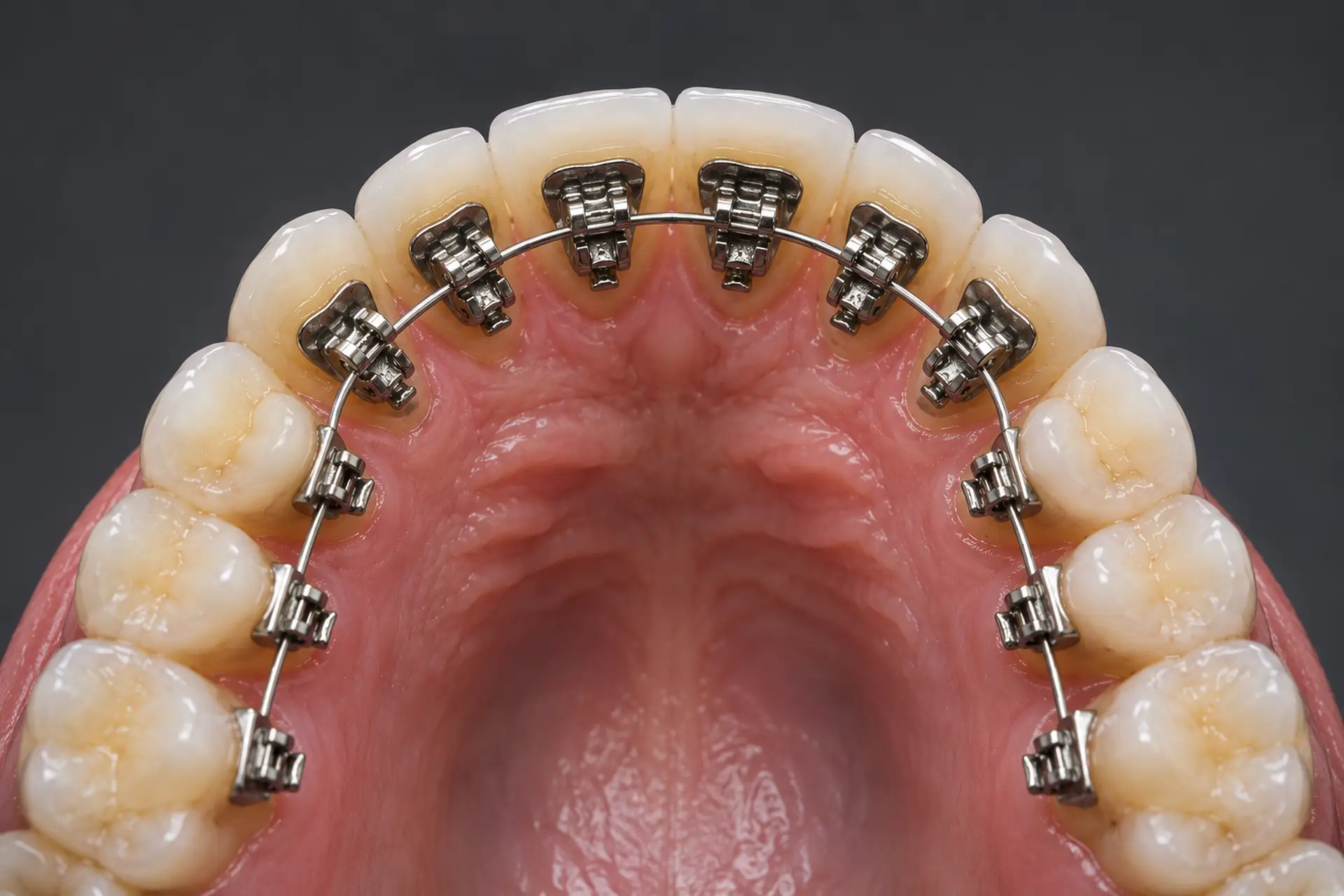
Lingual braces are fixed orthodontic appliances attached to the inner surface of the teeth instead of the front. Because they sit behind the dental arch, they remain virtually invisible during everyday activities.
Like traditional braces, they use customized brackets, an archwire, adhesive resin, and periodic orthodontic adjustments to gradually guide teeth into healthier positions. The orthodontist carefully plans every stage of treatment to improve bite alignment, occlusion, and overall smile function.
Modern systems often use digital impression technology, intraoral scanners, CAD/CAM manufacturing, and 3D treatment planning to create customized brackets that fit each patient’s teeth accurately.
Who Can Benefit from Lingual Braces?
Lingual braces are suitable for many teenagers and adults who want discreet orthodontic treatment.
They may help correct:
- Crowding
- Spacing between teeth
- Overbite
- Overjet
- Crossbite
- Open bite
- Deep bite
- Mild to complex malocclusion
A comprehensive examination helps determine whether they are the right choice. During treatment planning, your orthodontist may use:
- Dental impressions or a digital scan
- Panoramic radiograph
- Dental X-ray
- Cephalometric analysis
- Bite evaluation
These records allow precise planning before treatment begins.
How Do Lingual Braces Work?
Although hidden behind the teeth, the mechanics are very similar to traditional braces.
Customized Treatment Planning
Every smile is unique. Digital scans create a detailed model of your teeth, allowing the orthodontist to design personalized brackets and archwires for predictable tooth movement.
Many advanced systems also use indirect bonding, which positions the brackets accurately before they are transferred to your teeth.
Gentle Tooth Movement
The brackets are connected with stainless steel or nickel titanium archwires that apply gentle, continuous pressure.
Over time, the teeth gradually move into better alignment while protecting surrounding bone and supporting tissues.
As treatment progresses, regular orthodontic adjustments ensure the movement stays on track.
Benefits of Lingual Braces
Lingual braces offer several advantages for patients who want effective orthodontic care without visible appliances.
Nearly Invisible Appearance
Since the brackets are placed behind the teeth, most people will not notice you are wearing braces.
This makes them especially popular among professionals, public speakers, and adults seeking a discreet option.
Customized Precision
Many systems use customized brackets and advanced digital technology to improve fit and treatment accuracy.
Examples include:
- Incognito System
- WIN Lingual System
- Ceramic lingual brackets in selected cases
These appliances are manufactured specifically for each patient’s dental anatomy.
Effective for Complex Cases
Unlike some removable aligners, lingual braces can successfully treat many complex orthodontic problems involving significant bite correction and tooth movement.
No Need to Remember Removal
Because they are fixed appliances, they work continuously without depending on patient compliance.
Are There Any Limitations?
Every orthodontic treatment has advantages and challenges.
Some patients experience:
- Temporary tongue irritation
- Mild speech adaptation during the first few weeks
- Slightly more difficult cleaning
- Longer adjustment period than traditional braces
These issues usually improve as the tongue adapts. Orthodontic wax can reduce irritation while your mouth becomes accustomed to the brackets.
Caring for Lingual Braces
Excellent oral hygiene is essential throughout treatment.
Food particles can collect around the brackets, increasing the risk of plaque buildup if cleaning is neglected.
Helpful habits include:
- Brush carefully after every meal.
- Clean between brackets using an interdental brush.
- Floss daily with dental floss or floss threaders.
- Use fluoride toothpaste.
- Attend regular dental cleanings.
- Follow your orthodontist’s instructions.
Avoid biting directly into very hard or sticky foods that could damage brackets or wires.
Patients considering other cosmetic improvements after orthodontic treatment may also enjoy learning about types of dental veneers once their teeth have reached proper alignment.
What Happens During Treatment?
The treatment process usually follows several steps.
Initial Consultation
The orthodontist evaluates your teeth, gums, enamel, bite, and jaw relationship.
Digital imaging and diagnostic records help determine the most appropriate treatment.
Placement of Braces
Customized brackets are bonded using adhesive resin.
An archwire is then secured to begin gentle tooth movement.
Elastic bands may also be used in certain cases to improve bite correction.
Regular Follow-Up Visits
Every few weeks, your orthodontist checks progress and performs orthodontic adjustments.
These appointments help maintain steady movement while ensuring the appliances remain comfortable and effective.
Debonding
Once treatment goals have been achieved, the brackets are carefully removed without damaging the enamel.
Why Is the Retention Phase Important?
Straightening teeth is only one part of orthodontic treatment. After debonding, teeth naturally tend to shift back toward their original positions. This process is called relapse.
To reduce this risk, your orthodontist will recommend one of the following:
- Fixed retainer
- Removable retainer
Wearing your retainer exactly as instructed helps preserve your new smile for many years.
Some patients also choose to enhance the appearance of their smile further with cosmetic treatments such as porcelain veneers after orthodontic treatment is complete, depending on their individual dental goals.
Modern Technology Behind Lingual Braces
Today’s orthodontics has become more accurate than ever before.
Many practices now use the following:
- Intraoral scanner technology
- Digital impressions
- CAD/CAM manufacturing
- Three-dimensional treatment planning
- Customized brackets made from biocompatible alloy materials
These innovations improve bracket accuracy, treatment efficiency, and patient comfort while allowing highly individualized care.
Organizations such as the American Association of Orthodontists and the World Federation of Orthodontists continue to support evidence-based orthodontic care and ongoing professional education, helping patients benefit from modern treatment techniques.
Frequently Asked Questions
Are lingual braces painful?
Some mild discomfort is normal during the first few days and after adjustments. Most patients find the discomfort improves quickly as their mouth adapts.
How long does treatment usually take?
Treatment duration depends on the complexity of your case. Many patients complete treatment within 18 to 30 months, although some cases may require more or less time.
Will lingual braces affect my speech?
A short period of speech adaptation is common. Most patients adjust within a few weeks through normal conversation and practice.
Can I play sports while wearing lingual braces?
Yes. If you participate in contact sports, your orthodontist may recommend wearing a protective mouthguard.
Are lingual braces suitable for everyone?
Not always. Factors such as tooth shape, bite complexity, oral hygiene, and overall dental health determine whether they are the best option. A professional orthodontic evaluation is essential.
Key Takeaways
- Lingual braces are hidden behind the teeth for a discreet orthodontic solution.
- They effectively treat crowding, spacing, bite problems, and many forms of malocclusion.
- Modern digital technology allows customized treatment planning and precise bracket placement.
- Good oral hygiene with brushing, flossing, and interdental cleaning supports successful treatment.
- Temporary speech changes and tongue irritation usually improve over time.
- Retainers are essential after treatment to help prevent relapse.
- A personalized evaluation by an experienced orthodontist is the best way to determine whether lingual braces are right for you.
Conclusion
Lingual braces provide an effective and discreet way to achieve healthier tooth alignment without changing the appearance of your smile during treatment.
With advancements in digital orthodontics, customized brackets, and precise treatment planning, many patients can benefit from comfortable and highly personalized care.
Choosing orthodontic treatment is an important decision that should be based on professional evaluation, honest guidance, and clear communication.
At Airport Dent, we believe patients deserve compassionate support and evidence-based information at every stage of their dental journey.
By understanding your options and maintaining excellent oral hygiene throughout treatment, you can move confidently toward a healthier bite and a smile that lasts for years.