Losing or damaging a tooth affects more than your smile. It can make everyday tasks like chewing and speaking harder, and even change how your teeth come together. Today’s dental prosthesis technology brings a new era of solutions.
Modern dental prosthesis technology has transformed the way dentists plan and create tooth replacements. Digital dentistry and advanced dental materials now work together to create more personalized restorative solutions.
Curious about which option suits you best? Our dentists at the Kurtköy private dental clinic will guide you every step of the way, so you feel informed and confident. Meanwhile, daily brushing and interdental cleaning lay the groundwork for a healthy mouth.
What Is Dental Prosthesis Technology
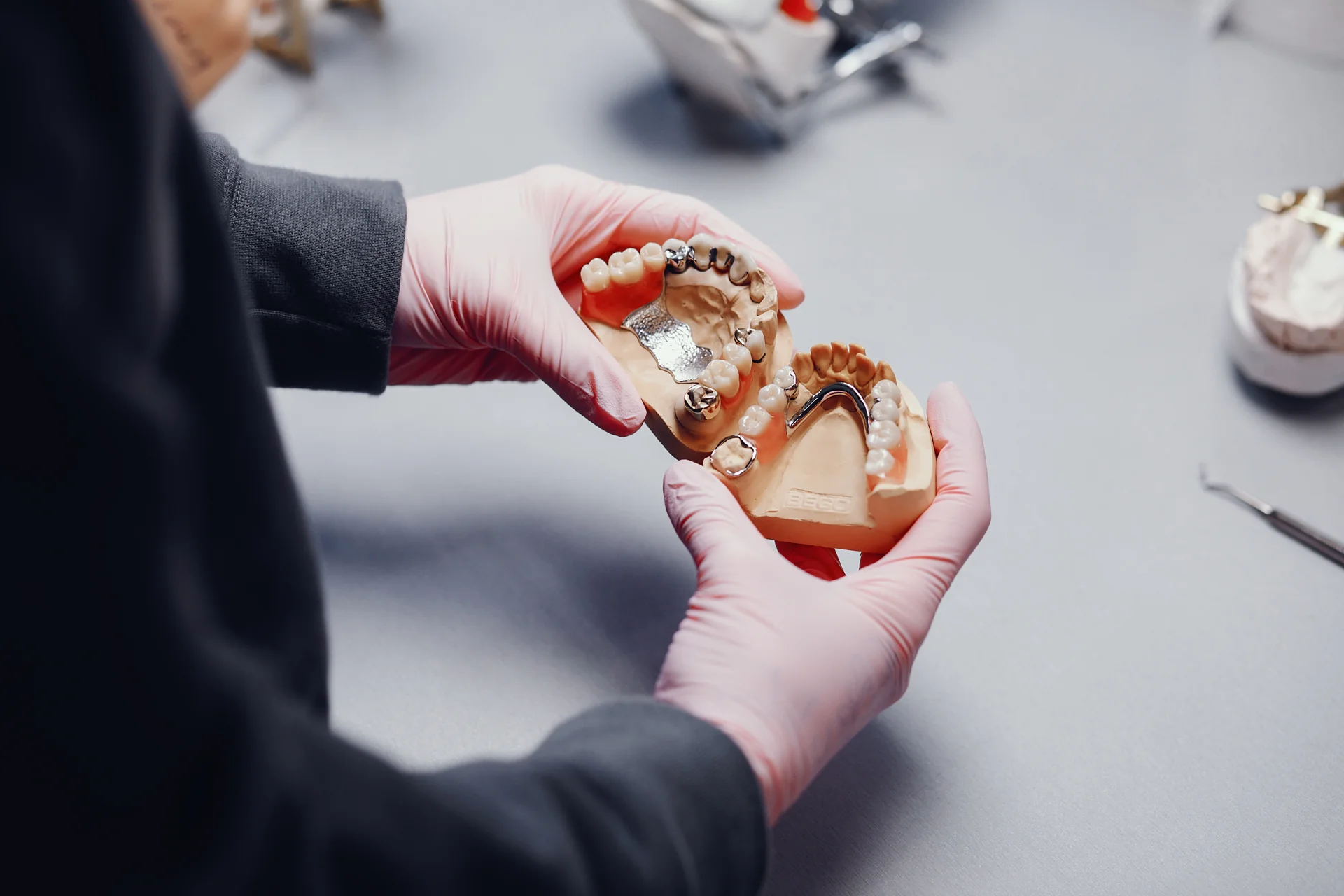
In simple terms, a dental prosthesis is any artificial tooth or set of teeth that takes the place of real ones. Dental prosthesis technology covers all the methods and tools used to replace or restore missing and damaged teeth.
Prosthetic examples include:
- Crowns: Caps on single teeth
- Bridges: Tooth replacements anchored to adjacent teeth
- Implants: A metal implant replacing a missing tooth
- Dentures: full or partial removable sets
The goal of dental prosthesis technology is not only to replace a tooth but also to restore normal function and appearance.
Digital Dentistry and CAD/CAM in Restorations
Advances in digital dentistry have greatly improved prosthetic care. Now dentists can use an intraoral or 3D dental scanner to quickly capture a digital model of your teeth.
This digital impression avoids messy putty and is often more comfortable. It also produces a highly accurate 3D image. Once a digital model is available, computer-aided design (CAD) software shapes the restoration.
The design is then made real through computer-aided manufacturing (CAM). This usually means a dental milling machine carves the part from a block of material (such as zirconia or ceramic).
The whole process from scan to finished tooth is often called a digital workflow. It is faster and more predictable. Overall, CAD/CAM dentistry and related tech provide more control and care.
However, remember that digital tools are just a means to an end. Your dentist’s expertise is still necessary for a comfortable and successful result.
Modern Materials for Dental Prostheses
Dental prosthesis materials have come a long way, supplying a wider range of strong, natural-looking options than ever before. Some of the most frequently used materials include:
- Zirconia: A very strong ceramic used for crowns, bridges, and implant restorations. Zirconia is tooth-colored, though less translucent than some ceramics. It is often chosen in back teeth where strength is critical.
- Lithium disilicate: Another ceramic known for its balance of strength and excellent esthetics. It is often used for front or highly visible teeth because it closely resembles natural tooth enamel.
- Porcelain (Dental ceramic): Glass-based ceramics are layered over metal or zirconia to create a very natural translucent look.
- Resin-based materials: These include composite resins and PMMA (a type of acrylic). Clinicians often use resins for temporary crowns or dentures.
- Hybrid ceramics: Materials that combine ceramic and resin are called hybrid or polymer-infiltrated ceramics. These ceramics are used in specific situations, offering a balance of strength and flexibility.
- Titanium: A metal that is the standard for dental implants and some implant abutments. It is biocompatible and strong, and the bone bonds to it through osseointegration
Choosing the right material is a personalized process. Dentists always consider the tooth’s location, the forces it will face, how it should look, and your particular needs.
Fixed vs Removable Prostheses
When replacing teeth, one key decision is whether the new teeth will be fixed (permanent) or removable. Both have their place:
Fixed prostheses
Fixed prostheses stay in place like natural teeth. They include single crowns, fixed bridges, and many implant-supported restorations. For example, a dental bridge or an implant-supported bridge is a fixed prosthesis.
Fixed solutions feel most like real teeth because you do not take them out. They typically require enough healthy bone or teeth for support.
Removable prostheses
Removable prostheses are meant to come out at night. These include traditional full or partial dentures. Removable implant dentures snap on and off the implants.
Which is better depends on your situation. If many teeth are missing and the remaining teeth are not strong enough to provide support, a removable denture is a good option. If you have healthy teeth or implants, a fixed prosthesis is a better choice.
Problems Addressed by Prosthetic Technology
Dental prosthesis technology can help with many common issues:
- Tooth loss: Dental prosthetics aim to replace missing teeth due to decay, injury, or extraction.
- Edentulism: Full dentures or full-arch implants can restore complete loss of all teeth in an arch.
- Damaged teeth: Broken or worn teeth can be treated with crowns or onlays to protect them.
- Bone loss: Implant placement can help preserve jaw bone through osseointegration.
- Poor appearance: Veneers and crowns can correct chipped, misshapen, or discolored teeth as an aesthetic form of prosthetic rehabilitation.
Each plan is tailored: the dentist evaluates your bite, gum health, jaw alignment, and even factors like your smile’s appearance.
Overview of the Treatment Process
While details vary by case, modern prosthetic treatment usually follows these steps:
Consultation and Exam:
The dentist checks your teeth, gums, jawbone, and bite (occlusion). X-rays or scans may be taken to evaluate the situation.
Planning:
Using the information gathered, the dentist plans the restoration. He may use digital tools to simulate the outcome. If implants are needed, the dentist creates a surgical plan.
Tooth Preparation or Implant Surgery:
For crowns or bridges, the dentist will prepare the existing teeth to receive the restoration.
For implants, the implant post is surgically placed into the bone. Sometimes a damaged tooth is removed first.
Impression or Scan:
A digital intraoral scan is taken, or, if needed, a traditional impression is made. This captures the prepared teeth or implant positions.
Temporary Prosthesis:
If there is a waiting period, your dentist may place a temporary crown or denture to protect the area and give you function.
Laboratory Fabrication:
The lab makes the final restoration. Materials like zirconia or porcelain are milled or layered according to the design. The lab ensures the color and shape match your mouth.
Fitting and Adjustment:
At a follow-up, the dentist tries the final prosthesis. The dentist checks fit, bite, and appearance. They adjust it for comfort and correct occlusion.
Final Placement:
The crown, bridge, or denture is cemented or attached. Implants are capped with abutments and crowns.
Maintenance:
After placement, you return to normal brushing and flossing routines. You may need a floss threader to get floss under a bridge or implant. Regular dental check-ups help keep everything healthy.
During the process, the dentist uses a “digital workflow.” For example, if an intraoral scanner were used instead of a tray impression, you might skip messy materials altogether.
If a 3D guide had been printed, the implant surgery might have been more precise. But regardless, the result should be a restoration that fits well, looks natural, and feels comfortable.
Frequently Asked Questions
What is the latest technology for dental prostheses?
Modern dental prosthesis technology includes digital impressions, CAD/CAM design, 3D printing, and advanced materials.
Artificial intelligence is beginning to assist in planning. These tools help make restorations faster and more accurate than ever.
Are digital dental impressions better than traditional impressions?
Digital impressions are more comfortable and faster for patients. They often match or exceed the accuracy of conventional putty impressions for many cases.
However, the best choice depends on the dentist’s equipment and the specific case. In some complex situations, a traditional impression is still used if it makes sense.
What materials are commonly used for dental prostheses?
Crowns, bridges, and dentures use materials like zirconia, lithium disilicate, porcelain, acrylic resin (PMMA), and sometimes metal alloys. Titanium is used for implants and abutments.
The dentist helps choose the right material for each tooth based on its location and function.
How do dental implants support prostheses?
A dental implant is placed in the jawbone where a tooth is missing. Over a few months, the bone grows around it, making a solid foundation. An abutment connects a crown or bridge to the implant.
The implant replaces the tooth root and firmly holds the replacement tooth in place.
Can 3D printing be used for dental prostheses?
Yes. 3D printing is used to make models, surgical guides, and sometimes parts of prostheses. You can have a temporary denture or a model of your teeth printed.
Final crowns are usually milled, but as 3D printing technology improves, some labs use printable ceramic or resin for certain restorations.
Is dental prosthesis technology suitable for everyone?
Not every patient needs or can get every type of prosthesis. Health factors such as gum disease, bone density, or overall health can affect options. For example, someone with severe bone loss might need a bone graft before implants.
Dentists evaluate each person’s situation and customize prosthetic treatments accordingly.
Key Takeaways
- Dental prosthesis technology uses modern tools like digital impressions, CAD/CAM design, and 3D printing to create replacements for missing or damaged teeth.
- Materials have improved. Zirconia, lithium disilicate, porcelain, resin, PMMA, and titanium each serve different needs in terms of strength and appearance.
- Prosthodontics includes fixed prostheses such as crowns, bridges, and implant-supported restorations, as well as removable prostheses such as dentures. The choice depends on the patient’s oral health and needs.
- Dental implants are artificial roots that allow restorations to replace a single tooth or entire arches. Osseointegration makes implants stable and durable.
- New tech like guided implant surgery, digital smile design, and AI can improve planning, but they support rather than replaces expert dental care.
- Patients must maintain good oral hygiene before and after any prosthetic work, brushing twice daily and cleaning between teeth daily.
- The best treatment plan is always personalized. A dentist will evaluate features such as occlusion, bite registration, and overall health before recommending an option.
Conclusion
Dental prosthesis technology has evolved, providing patients with more dependable, lifelike solutions than ever before.
From crowns and bridges designed on computers to full arches supported by implants, today’s dentists have an impressive toolkit for restoring smiles.
The real magic occurs when these innovations meet expert care and open communication. Knowing what to expect can boost your confidence throughout the process.
If you are dealing with tooth loss or damage, start a conversation with your dentist. They can walk you through the best materials and procedures for your needs.
With caring support and the latest technology, you can make choices that lead to a healthy and bright smile.