A loose denture can make everyday life harder than it needs to be. Eating, speaking, laughing, and even smiling may feel less comfortable when a denture shifts during normal activities. This is where dental adhesive can provide helpful additional retention for some denture wearers.
Dental adhesive is designed to improve the grip between a denture and the underlying tissues. It can come as a cream, powder, strip, or pad, with different products using ingredients such as carboxymethylcellulose or zinc oxide.
However, adhesive is not a substitute for a properly fitting denture or professional dental care. If your denture repeatedly moves, causes sore areas, or no longer feels comfortable, the underlying issue may be the fit rather than a lack of adhesive. If you have concerns about your oral health or denture, visit your dentist for an appropriate assessment.
This guide explains how dental adhesive works, the different types available, how to use it safely, and when professional care may be more appropriate.
What Is Dental Adhesive
Dental adhesive is a material used to improve the retention and stability of a removable dental prosthesis, most commonly a denture. It creates additional adhesion between the denture base and the oral tissues.
A denture adhesive does not permanently attach a denture to the mouth. Instead, it helps the prosthesis remain in position during activities such as eating and speaking.
The denture itself may contain an acrylic resin called polymethyl methacrylate. The adhesive interacts with moisture in the mouth and the denture surface to create a more secure feel.
Dental adhesives are generally considered an optional aid for appropriate denture wearers. They should not be used to hide a serious problem with denture fit.
How Does Dental Adhesive Work
Dental adhesive works through a combination of physical and chemical effects.
Many adhesive products contain water absorbing materials. When they interact with saliva, they can swell and become more viscous. This creates a layer between the denture base and oral mucosa that can improve retention.
The effectiveness of an adhesive depends on several factors.
These include the design and condition of the denture, the shape of the oral tissues, saliva, the amount of adhesive used, and the way the product is applied.
A properly fitting denture generally provides much of its stability through its design and close adaptation to the supporting tissues. Adhesive may provide additional support rather than replacing that natural retention.
Types of Dental Adhesive
Dental adhesives are available in several forms. The most suitable option depends on individual preference and the type of denture being worn.
Denture Adhesive Cream
Denture adhesive cream is one of the commonly used forms. It is applied in small amounts to specific areas of the denture before placement.
Cream can provide additional retention while also helping reduce the movement that some patients experience during daily activities.
Using too much cream does not necessarily provide better results. Excess product can squeeze out around the denture and create an unpleasant sensation.
Denture Adhesive Powder
Denture adhesive powder is spread across the denture base before the prosthesis is placed in the mouth.
Powder can be useful for people who prefer a lighter application. Following the manufacturer’s instructions is important because application methods differ between products.
Denture Adhesive Strips
Adhesive strips are preformed pieces designed to fit particular areas of a denture.
They can make application relatively simple and may appeal to people who prefer a controlled amount of adhesive.
Denture Adhesive Pads
Adhesive pads are another option for improving denture retention. They are positioned on the denture base and then moistened or activated according to the manufacturer’s directions.
Because denture designs vary, the product must be positioned correctly to avoid discomfort or interference with the denture’s fit.
What Ingredients Are Found in Dental Adhesives
Dental adhesive formulations vary between products. Some contain ingredients designed to absorb moisture and increase viscosity, while others rely on different adhesive materials.
Common ingredients can include carboxymethylcellulose, sodium carboxymethylcellulose, and polyvinyl acetate.
Some formulations may also contain zinc oxide. The exact ingredients and their concentrations vary, so patients should read the product label and follow the manufacturer’s directions.
Anyone with known allergies or sensitivities should review the ingredients carefully and discuss concerns with a dental professional.
Dental Adhesive and Denture Stability
A denture should have an appropriate fit before adhesive is considered.
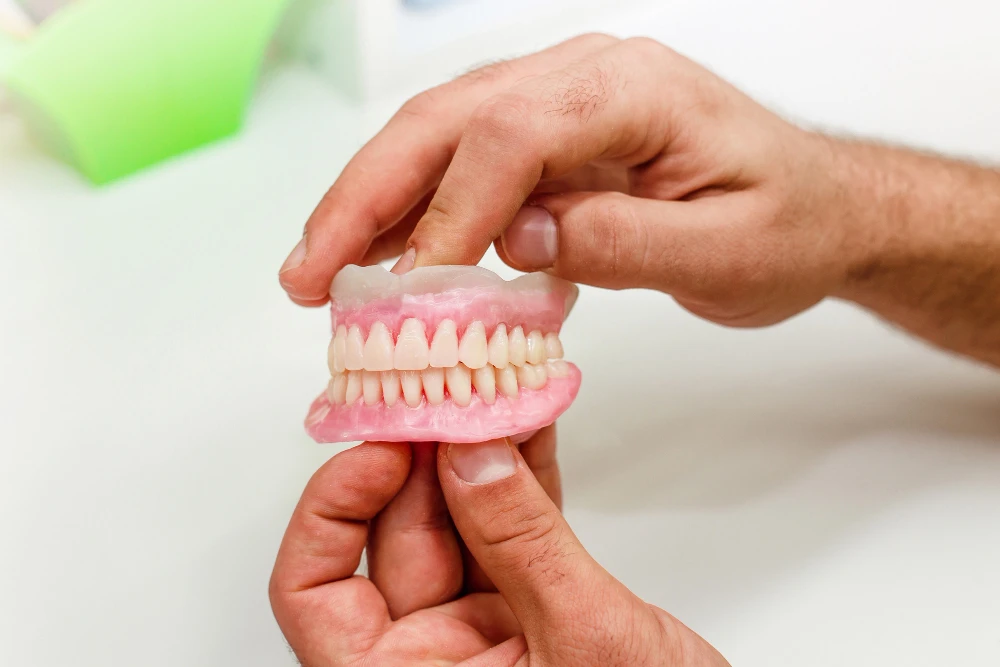
A complete denture replaces all teeth in an arch, while a partial denture replaces some missing teeth and usually depends on remaining teeth and supporting tissues for stability.
Both types may sometimes be used with an adhesive, depending on the clinical situation.
A denture that suddenly becomes loose may have changed because the supporting tissues have changed over time. Bone and soft tissue can naturally change after tooth loss, affecting the relationship between the denture base and the oral tissues.
In such cases, simply adding more adhesive may not solve the underlying problem.
When Should You Use Dental Adhesive
Dental adhesive may be useful when a denture is appropriately fitted but additional retention is desired.
Some people may find it helpful during specific situations, such as eating certain foods or speaking for extended periods.
It can also provide additional confidence for people who occasionally experience minor denture movement despite having an otherwise satisfactory fit.
However, persistent movement deserves attention.
If a denture repeatedly causes irritation, pain, or difficulty eating, a dental professional may need to assess the prosthesis and oral tissues.
How to Apply Dental Adhesive Safely
Using a dental adhesive correctly can help prevent unnecessary buildup and discomfort.
Start with a clean denture. Remove old adhesive and clean the prosthesis according to the manufacturer’s instructions.
Apply only the recommended amount. For cream products, small dots or short lines are often sufficient, but the specific instructions on the product should always be followed.
Place the denture carefully into the mouth and hold it in position for the recommended period.
If adhesive consistently squeezes out around the edges, too much may have been applied.
Never use household glue or another non dental adhesive on a denture. These substances are not designed for oral use and can damage the prosthesis or tissues.
Dental Adhesive Is Not a Replacement for Proper Denture Fit
One of the most important points for denture wearers is that adhesive cannot correct every fit problem.
A denture may become loose because of changes in the underlying tissues, wear, damage, or changes to the prosthesis itself.
A dentist may recommend denture relining when the relationship between the denture base and supporting tissues needs improvement. In other cases, a denture repair or replacement may be more appropriate.
Trying to compensate for a poor fit by repeatedly increasing adhesive use can make cleaning more difficult and may delay necessary professional assessment.
If you notice persistent discomfort or unexplained oral pain, it is also important to understand the possible causes. Information about teeth hurting can help you recognize why professional evaluation may sometimes be necessary.
Dental Adhesive and Oral Hygiene
Good oral hygiene remains important when using a denture adhesive.
Remove removable dentures regularly according to your dental professional’s instructions. Clean the denture and your mouth carefully to reduce the buildup of food debris, plaque, and adhesive residue.
The gingiva and oral mucosa should also be kept clean.
Denture wearers should pay attention to persistent redness, swelling, tenderness, or other changes in the tissues beneath the prosthesis.
One condition associated with denture wearing is denture stomatitis, which involves inflammation of the tissues beneath a denture. Several factors can contribute to this condition, so persistent symptoms should be assessed by a dental professional.
Never sleep with a denture unless your dentist has specifically advised you to do so.
Dental Adhesive Compared With Dental Bonding Agents
The term dental adhesive can sometimes create confusion because it is also used in restorative dentistry.
A dental bonding agent is different from denture adhesive.
In restorative dentistry, adhesive systems help materials such as dental composite bond to tooth structures. The process may involve preparing the tooth surface, etching, applying an adhesive system, and using polymerization to harden the restorative material.
This is part of adhesive dentistry and is generally performed by a dental professional.
Depending on the procedure, a dental curing light may be used for light curing.
Dental adhesives used in restorative procedures can help create adhesion between restorative materials and dental enamel or dentin.
This is very different from the removable denture adhesives discussed earlier.
Dental Adhesive and Other Dental Treatments
Adhesive technology is also relevant to several restorative treatments.
A dental crown, dental veneer, or dental bridge may require an appropriate dental cement or resin cement for retention.
Some procedures use resin based materials, while others may involve materials such as glass ionomer cement, depending on the restoration and clinical requirements.
Dental implants are another treatment option for replacing missing teeth. An implant supported restoration differs substantially from a removable denture because the replacement tooth is supported through an implant system rather than relying only on removable denture retention.
Patients considering a replacement for missing teeth can learn more about the dental implant treatment process and discuss whether an implant based option is appropriate for their individual circumstances.
When Should You See a Dental Professional
Professional evaluation is important when denture problems continue despite adhesive use.
Arrange a dental assessment if you experience persistent soreness, repeated slipping, difficulty chewing, damaged dentures, or significant changes in how the prosthesis fits.
A dental professional can examine the denture, denture base, oral tissues, remaining teeth, and overall oral health.
The solution may involve adjustment, denture relining, denture repair, replacement, or a different type of dental prosthesis.
Personalized assessment is particularly important because the same denture problem can have different causes in different patients.
Frequently Asked Questions
Is dental adhesive safe to use
Dental adhesive products designed for oral use can be used according to their manufacturer’s instructions. Avoid using excessive amounts and speak with a dental professional if irritation or other problems develop.
Can dental adhesive fix a loose denture
Dental adhesive may improve retention, but it does not correct an improperly fitting denture. A loose denture should be evaluated if the problem is persistent.
How often should denture adhesive be applied
Application frequency depends on the product and individual circumstances. Follow the manufacturer’s instructions and avoid repeatedly applying additional adhesive without cleaning away the previous product.
Can I sleep with dental adhesive on my denture
Removable dentures are commonly removed for cleaning and to allow the oral tissues to rest. Follow your dentist’s specific instructions regarding nighttime denture use.
What should I do if dental adhesive causes irritation
Stop using the product and speak with a dental professional if you develop persistent irritation or discomfort. The product ingredients, denture fit, or another oral condition may need evaluation.
Is denture adhesive the same as dental bonding
No. Denture adhesive helps retain a removable denture, while dental bonding agents are used in restorative procedures to help dental materials adhere to tooth structures.
Key Takeaways
- Dental adhesive can provide additional retention for some removable dentures.
- Denture adhesive is available as cream, powder, strips, and pads.
- Common ingredients include carboxymethylcellulose, sodium carboxymethylcellulose, and polyvinyl acetate.
- Adhesive should not be used to hide a persistent denture fit problem.
- Good denture and oral hygiene are essential.
- Persistent soreness, instability, or irritation should be assessed professionally.
- Dental bonding agents used in restorative dentistry are different from removable denture adhesives.
- The appropriate treatment depends on the condition of the denture and the patient’s oral health.
Conclusion
Dental adhesive can be a useful aid for people who need additional retention from a removable denture. When used correctly, it may help improve stability and confidence during everyday activities.
However, a healthy mouth and properly fitting dental prosthesis remain the foundation of comfortable denture use. Excessive adhesive should never be considered a solution for persistent pain, poor fit, or damaged dentures.
Regular professional care allows problems to be identified early and helps patients understand their available treatment options. Clear communication, personalized guidance, and compassionate dental care can make the treatment journey more comfortable while supporting long term oral health.